With the arrival of Covid-19, a real life, remote working experiment has been put to test, and whilst it has had its challenges, such as the loss of control and a sense of disconnection amongst peers, it has also opened our eyes to the potential of employees working effectively from home, supported by smart IT platforms. Where businesses previously thought that it was not possible, it has proven possible.
During lockdown, we had no option but to accept the remote working arrangement, but now that it has become a choice, it will be interesting to see the extent to which businesses opt to reduce their fixed rental overheads and adopt this method of working, versus just returning to the physical office space as before. According to a recent KPMG CEO Outlook report, in which 315 Global Corporate CEO’s participated in a survey, 68% indicated that they plan to reduce their company’s office space.
Clearly, the degree to which remote working is embraced, will have a direct impact on the demand for commercial office space and therefore on commercial property. However, the effect may not be limited to commercial, but may also have a knock-on effect on other property types.
In a September Property Insights report, John Loos, a Property Strategist with FNB Property Finance, identified some key considerations around the impacts of the remote working trend.
For example, if businesses permit remote working arrangements in the future, will it still be necessary for people to live as close to their workplaces, or could they live further away in order to take advantage of the relative space, environment and healthy lifestyle benefits of suburban living? The appeal of this option may be further enhanced if traffic is reduced by the remote working trend, making it even easier to commute to the office for the occasional meeting.
The lure of more spacious living has increased during lockdown. If we are going to spend more time at home in the future, then our homes will become more important in determining our quality of life, and it is likely that we will see people seeking more spacious homes with suitable workspaces and access to health and well-being activities on their doorstep.
This trend of living further away from work could also translate into an increase in “semigration”, where business people seek to move away from the stress of first tier cities, relocating to the more relaxed lifestyle offered by second-tier cities and towns. Whilst the weaker economy may act as an inhibiting factor, the more affluent may take advantage of this remote working phenomenon to reside in Durban or Cape Town and commute by plane to Gauteng for work from time to time.
A drawback of this is that unexpected, in-person interactions are limited, and meetings need to be more formally scheduled in advance. This may result in people rather opting to live away from the workplace – but still within the same Metro – as an alternative to city hopping.
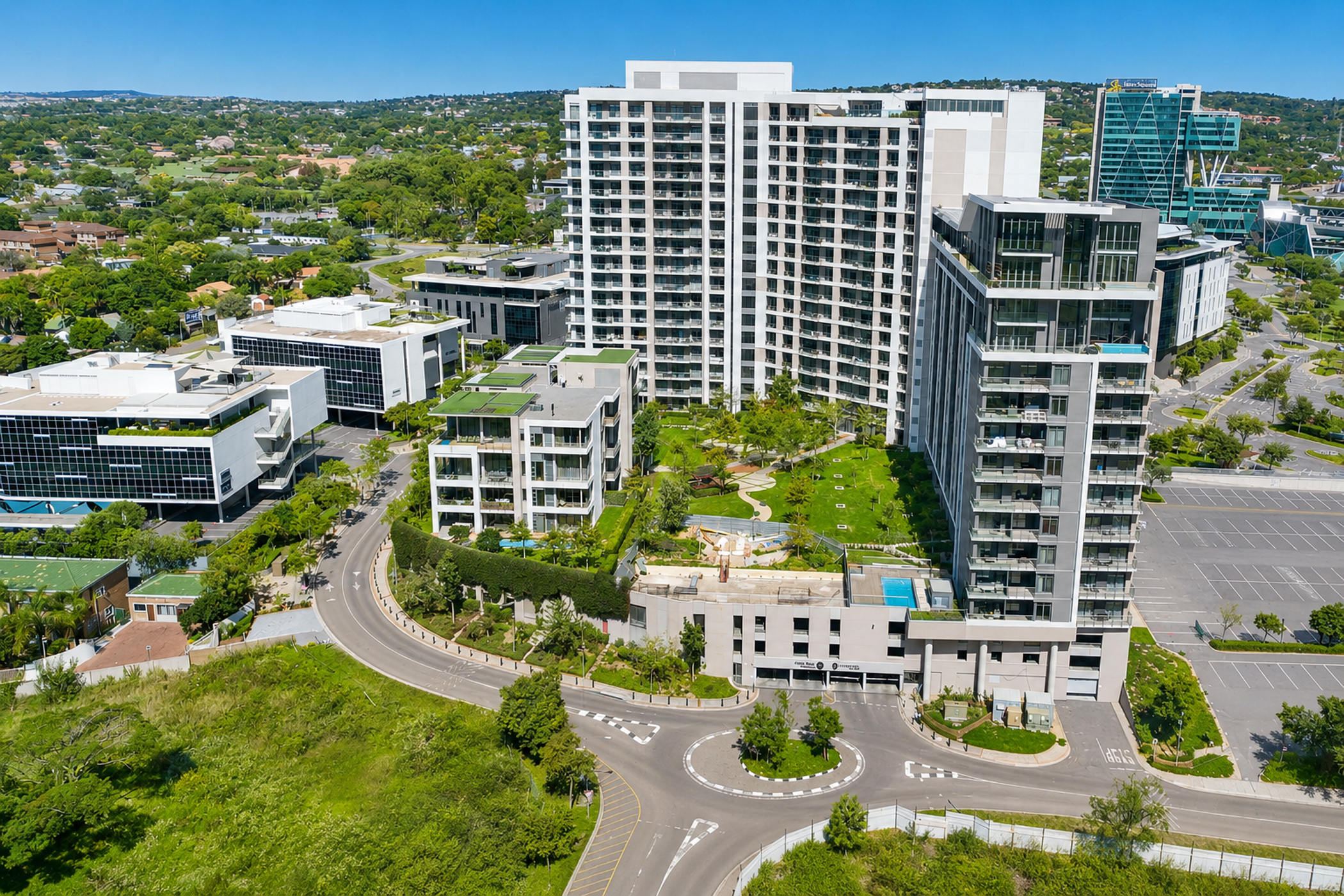
What does this mean for high density residential living near major business nodes? If it is practical and preferable for people to live outside of the city, then it is possible that demand for high-density accommodation, usually popular due to workplace proximity, may experience softening demand.
Furthermore, as owners of office blocks seek to occupy their buildings, they may creatively convert them into high density residential apartments, further weakening the demand and supply equation of residential blocks in metro areas. Either way, it is likely that affordable residential units will remain in demand, but we will have to wait and see what happens with higher-end, high density apartments in these locations.
Finally, it goes without saying that hospitality and conferencing property has been and will be affected by the remote working phenomenon. Whilst leisure tourism demand is likely to recover, businesses will opt to conference remotely in the short term, driven by health concerns, and potentially in the longer term by proven cost savings.
Cleary the remote working trend has had a profound impact on commercial property with knock-on effects on the residential property market. With so many unknowns currently, we will have to wait and see whether we truly are creatures of habit, or whether the Covid-19 interlude has an enduring effect on how we use property at work, and at home.