By Dr Andrew Golding, chief executive of the Pam Golding Property group
South Africa’s youth-driven population growth is once again intensifying its impact on the country’s housing market, with Gauteng emerging as one of the biggest beneficiaries as younger buyers increasingly gravitate towards urban economic hubs in search of jobs, lifestyle convenience and affordable entry points into property ownership.
With the median age of South Africans now just 29 years, and the average age of first-time buyers 35 years, the country’s demographic profile is creating powerful long-term demand for housing, particularly among first-time buyers - those gaining their first foothold in the residential property market.
Reflecting this shift, the national average age of SA home buyers declined to 40 years during the January to April 2026 period – one year younger than a year earlier.
Notably, Gauteng continues to absorb the largest share of South Africa’s internal migration. According to Stats SA, the province’s population increased from 9.9 million in 2002 to 16.1 million in 2025 – an increase of more than six million people over 23 years.
While public attention has largely focused on semigration to the Western Cape, Gauteng remains the country’s biggest population magnet, particularly for younger South Africans seeking employment opportunities. This demographic momentum is now feeding directly into housing demand.
According to ooba Home Loans, first-time buyer appetite in Johannesburg strengthened to 44.2% of total applications received between January and April 2026, while in the more affordable Gauteng South and East rose even higher to 57.0% of total applications.
During the same period, Johannesburg recorded the strongest growth in first-time buyer purchase prices nationally, rising by 21.8% year-on-year to an average of R1.38 million from January to April 2026 – although the robust increase in prices is partially attributable to unusually low prices paid during the same period last year. Gauteng South and East followed with growth of 7.3%, with average first-time buyer purchase prices reaching R1.03 million.
Importantly, conditions for first-time buyers are improving as banks compete aggressively for market share, increasingly offsetting affordability pressures through more competitive mortgage lending. In an effort to remove barriers to homeownership, banks are offering incentives such as cost-inclusive home loans, reduced deposit requirements and more favourable lending terms for first-time buyers.
According to ooba Home Loans, national deposits as a percentage of purchase price declined again in April 2026 on a six-month moving average basis. The average deposit nationally averaged 12.4% between January and April this year, while the average deposit paid by first-time buyers declined to 8.3%, down from 9.9% during the same period in 2025.
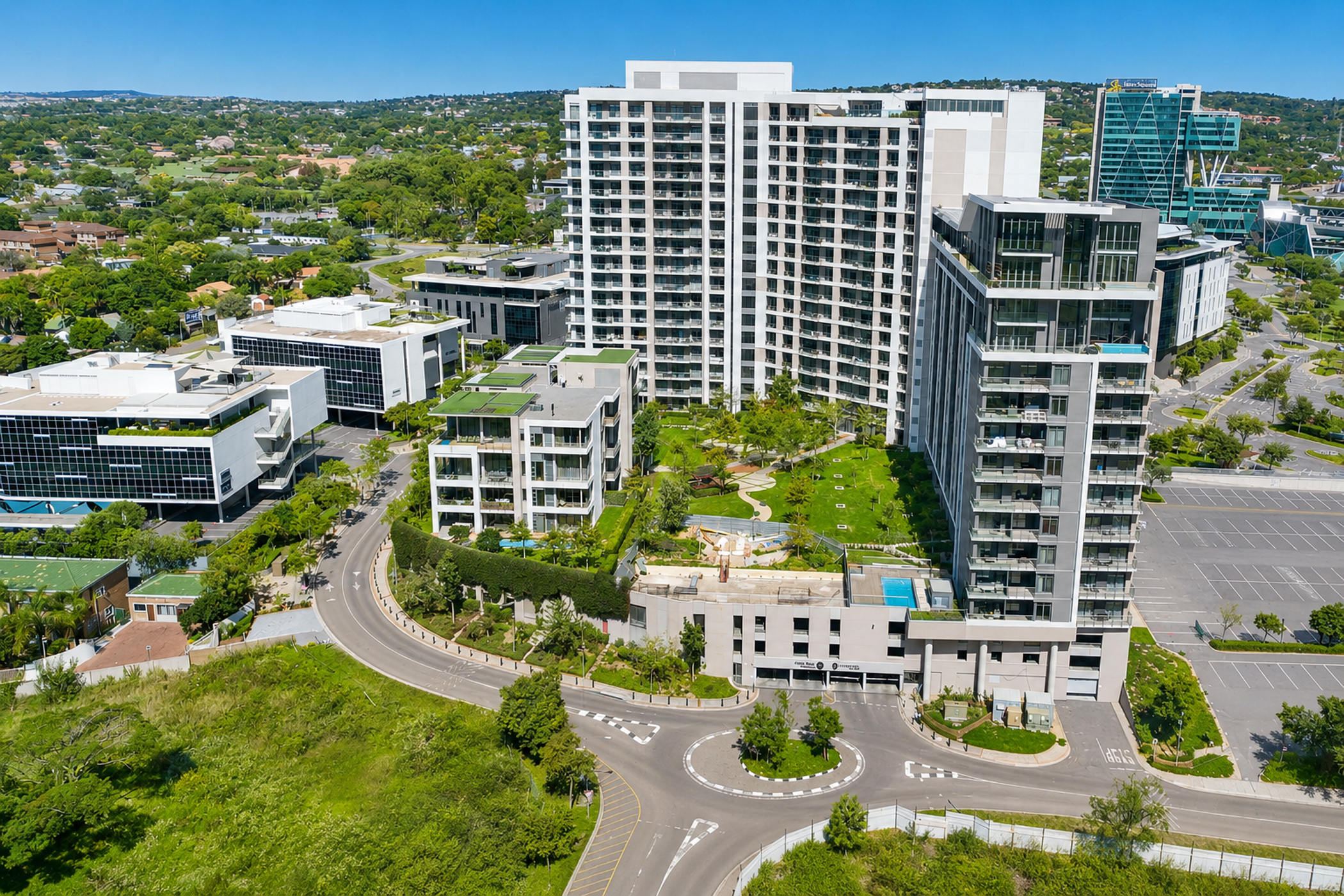
Apart from improved first-time buyer accessibility to finance, other trends converging to support Gauteng’s residential property market recovery include relatively stable interest rates, new residential developments entering the market, and growing demand for convenient lifestyle hubs where residents can live close to work, retail and entertainment amenities.
This trend may accelerate further should fuel prices and transport costs continue rising amid ongoing global oil market instability.
Importantly, Gauteng’s employment market continues to underpin this demand. Over the past five years, Gauteng has generated more employment opportunities than the Western Cape, although these jobs were spread across Johannesburg, Tshwane and Ekurhuleni – each with housing markets larger than Cape Town’s.
This has diluted the visible pressure on Gauteng’s residential property market compared to Cape Town, where a similar volume of employment growth was absorbed within a significantly smaller housing market.
Income levels also continue to reinforce Gauteng’s buying power. According to SARS 2025 statistics published by The Outlier, assessed taxpayers in Johannesburg earned the highest average income among South Africa’s metros in 2024, at R480 318 per annum – R109 000 more than Cape Town and R68 200 more than Tshwane.
Concurrently, South Africa’s demographics are creating opportunities at the opposite end of the age spectrum. The country’s population aged over 60 has increased by approximately three million over the past 23 years, creating rising demand for downsizing, retirement, and age-appropriate housing. Supply in this segment continues to lag demand, suggesting strong long-term growth potential for retirement and senior living developments.
National house price growth
According to the Pam Golding Properties Residential Property Index, revised national house price inflation accelerated to +4.1% in April 2026. However, the ongoing Middle East crisis poses a clear upside risk to South Africa’s inflation outlook, which, if sustained, could place further pressure on household finances and potentially force interest rates higher.
Among the major regional markets, although losing some momentum, the Western Cape continues to outperform with house price inflation of +8.6% in the year to April 2026, while both KwaZulu-Natal (+3.1%) and Gauteng (+2.6%) continue to show modest acceleration.
At metro level, Lightstone statistics indicate that house price growth is beginning to slow in Cape Town (+8.95% in April), Tshwane (+2.8%) and Johannesburg (+1.4%), while continuing to accelerate in eThekwini (+3.1%). Within Gauteng, however, Ekurhuleni stands out as the clear exception, with house price growth accelerating further to +5.2% in April.
Interestingly, national revised data also shows freehold homes continuing to outperform sectional title properties, with freehold house price inflation rising to +5.7% in April compared with sectional title growth of +3.9%.
Positively, investor appetite is also showing improvement. National demand for investment properties rose to 11.6% of all ooba Home Loan applications, with renewed appetite recorded in the Eastern Cape (12.6%) and KwaZulu-Natal (12.1%).
As South Africa’s youthful population continues to expand and urbanise, Gauteng’s large and diversified metro economies appear increasingly well-positioned to capture the next wave of housing demand, even as broader economic and geopolitical risks continue to shape the country’s property outlook.
All comments above by Dr Andrew Golding, chief executive of the Pam Golding Property group
For further information visit www.pamgolding.co.za
Ends
Issued by Gaye de Villiers
Tel: 083 325 1939
On behalf of Pam Golding Properties